
RESEARCH
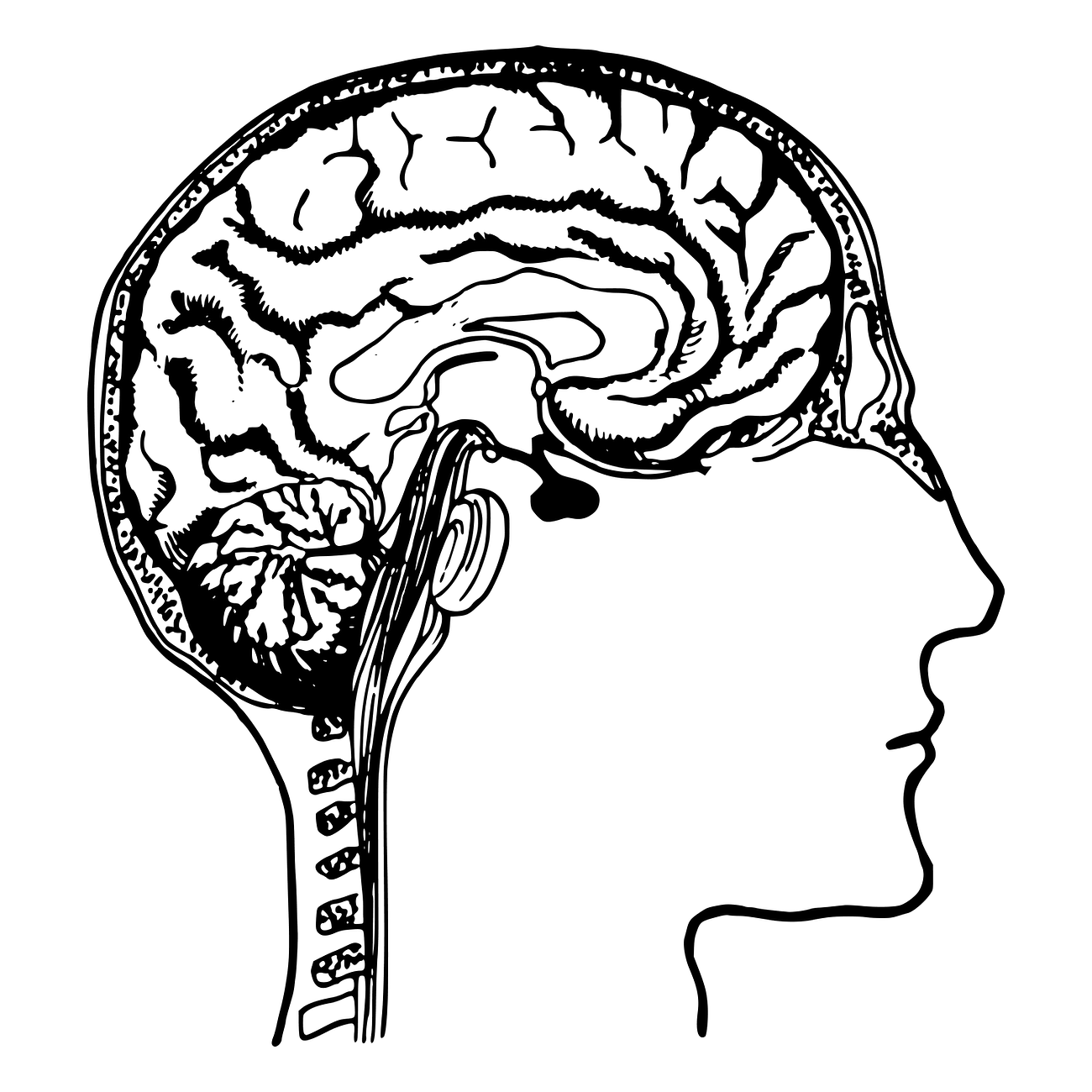
The brain is a dynamic structure. It changes with age, experience, input from the environment, and knowledge. Modifications in the strength of synaptic connections are thought to underlie learning and memory in the brain. One form of synaptic plasticity, long-term potentiation (LTP) is hypothesized to be a substrate for learning and memory. In the lab we investigate aspects of learning and memory and how synaptic plasticity is modulated by various factors such as stress, depression, and steroids.
Research Interests:
Neurophysiology, Neuroendocrinology, Stress Physiology, Learning and Memory. How stress affects learning and memory. The modulation of synaptic plasticity.
Specific projects:
We study synaptic plasticity, and how synaptic plasticity can be modulated by stress, by the environment, and by compounds called ginsenosides.
Chronic stress has been shown to contribute to and exacerbate depressive symptoms in humans and in animal models. The modulation of neuroplasticity by stress may be related to depression. It has been shown that chronic stress impairs LTP, and alters synaptic plasticity in the hippocampus. Treatment with antidepressants reverses these impairments. In the lab, we study how stress affects depressive-like behaviors in rats, and the neuroplastic changes that occur in the hippocampus due to stress and treatment with antidepressants.
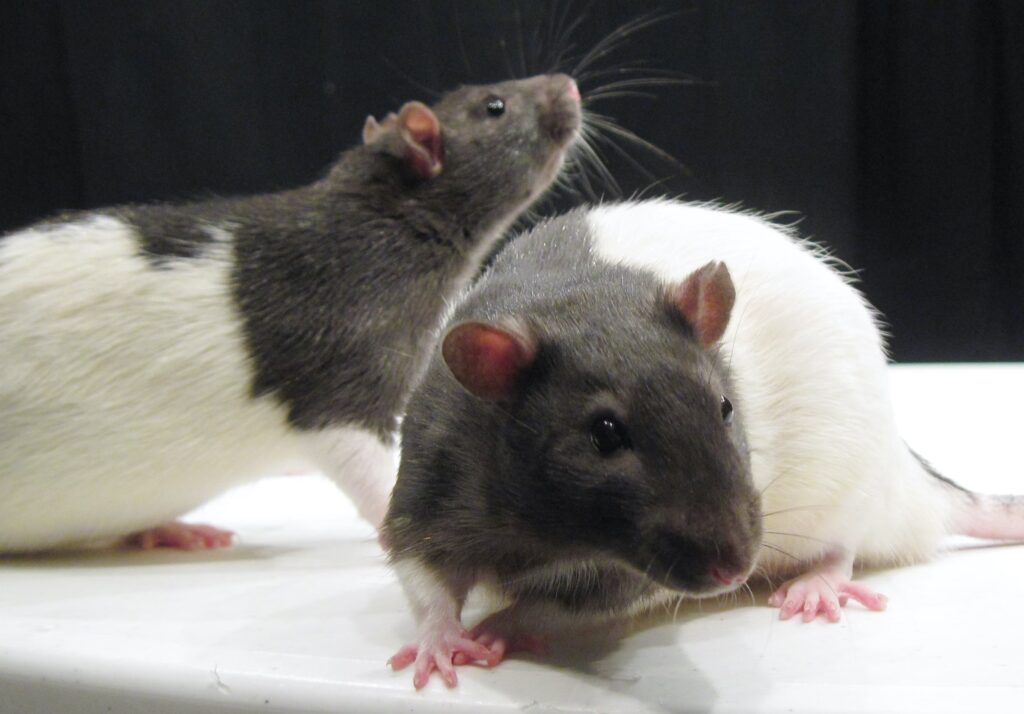
Animal Model: We use rodents, predominately rats in our experiments. (photo: Jason Snyder)
Electrophysiology: We examine synaptic plasticity (LTP) in the hippocampus (important for spatial learning and memory, memory encoding and consolidation).
(Rat brain shown, hippocampus highlighted, source: John C Fiala & Josef Spacek)

- Articles about summer research (Pomona SURP, Pomona SURP2)
- TikToks about research (TikTok, TikTok2)
After we stress out a rat, we use behavioral assays to test learning and memory.

Behavioral Assay: Barnes maze. Developed by Carol Barnes in 1979, the assay is used to measure spatial learning and memory (a hippocampal dependent task). Relies on a rodent’s aversion to bright spaces. (source: qpsneuro.com)
We also examine synaptic plasticity in the brain by doing electrophysiology. To do this we remove the hippocampus from the brain, slice it, put it in a recording chamber, and place electrodes in the slice to record neuronal responses.
Electrophysiology: A hippocampal slice from the brain of a rat. Electrodes have been placed in position to record neuronal activity. (photo: J King)
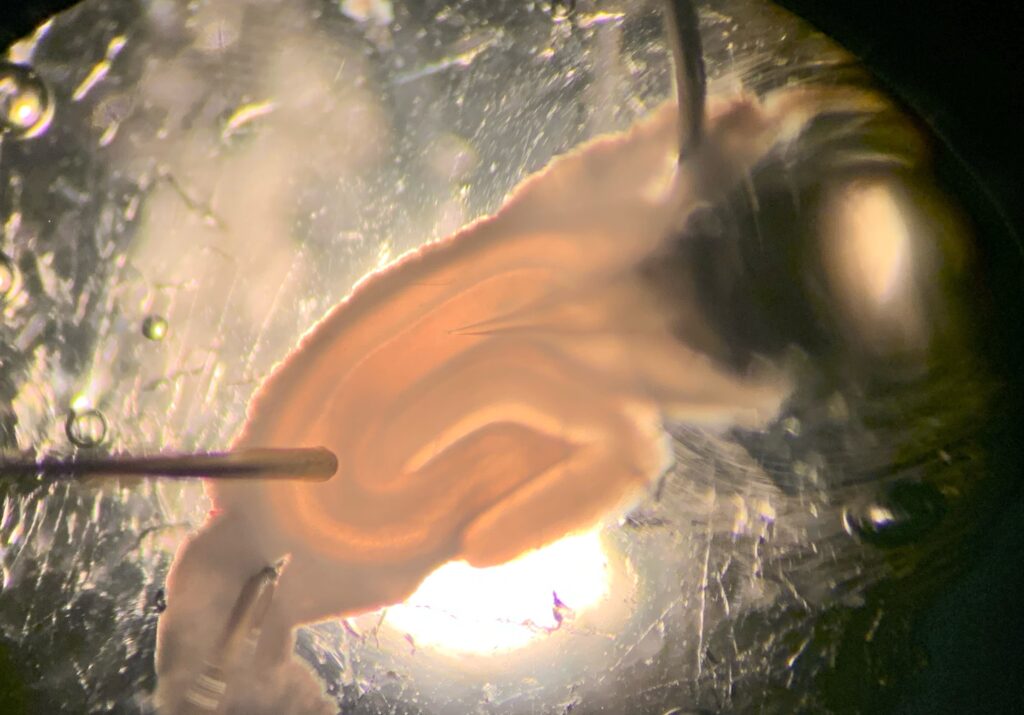
We have found that stress will impair learning and memory and reduce synaptic plasticity. However, we are also interested in how to reverse these impairments. We have been examining enriched environments as a potential means to rescue stress induced impairments in learning and memory and synaptic plasticity.
We are also interested in examining the effects of Panax ginseng on the modulation of synaptic plasticity in the hippocampus. Traditional Asian herbs have long been touted to improve learning and memory function, but have not been studied in-depth. We are currently investigating the effects of whole ginseng extracts as well as its constituent active ginsenosides on long-term potentiation in rat hippocampal slices.
